





Which Fuel Should I Use in a 2026 Jeep® Wrangler near Waukesha, WI?
City Jeep of Brookfield – Which Fuel Should I Use in a 2026 Jeep® Wrangler near Waukesha, WI?
If you are shopping the 2026 Jeep® Wrangler around Waukesha, WI and wondering what to put in the tank, we are here to make it simple. At City Chrysler Dodge Jeep Ram Fiat of Brookfield, we talk fuel every day with Wrangler drivers who split their time between I-94 commutes, Lake Country weekends, and trail exploring in the Kettle Moraine. The right octane choice depends on which Wrangler engine you pick and how you plan to drive, tow, and explore.
The quick answer, tailored to how you drive
Before we dive deeper, here is a concise guide you can bookmark. It covers the two engines available on the 2026 Jeep® Wrangler and what we recommend based on real-world use around Waukesha and greater Milwaukee.
- 3.6L Pentastar® V6 — Regular Unleaded 87 Octane: This engine is engineered for high-quality unleaded regular gasoline (87 AKI) and performs as designed on it. You do not need premium for everyday driving, highway cruising, or trail days.
- 2.0L Turbo I4 — Regular 87 Octane Acceptable, 91+ for Optimal Performance: The 2.0L Turbo is fully compatible with 87 octane. For optimal performance — especially when towing, climbing grades, or merging hard — fill with 91 or higher-octane premium.
- Fuel Tank Sizes — Plan Your Stops: Wrangler 2-Door holds 17.5 gallons; Wrangler 4-Door holds 21.5 gallons, helpful when planning longer drives between Waukesha, Pewaukee, and beyond.
That high-level guidance aligns with the Jeep Brand FAQ for the 2026 Wrangler, and it reflects what we see with owners across Brookfield and Waukesha. Now let’s break down why octane matters and when it is worth stepping up to premium — especially for the 2.0L Turbo.
Why octane matters in the 2026 Jeep® Wrangler
Octane is about resistance to knock under load, not about “power in a bottle.” On the 2026 Jeep® Wrangler, both the 3.6L Pentastar® V6 and 2.0L Turbo I4 are calibrated to run cleanly on unleaded regular gasoline with an 87 octane rating. The V6 is a natural fit for everyday use on 87 octane — you get the intended 285 horsepower and 260 lb-ft of torque with the confident, linear throttle response Wrangler buyers expect.
The 2.0L Turbo I4 pairs forced induction with smart engine management. It delivers 270 horsepower and 295 lb-ft of torque and is happy on 87 octane for commuting on Bluemound Road or running errands in downtown Waukesha. When you demand sustained peak performance — think on-ramp sprints onto I-94 with camping gear on board or extended grades on county roads west of Delafield — the turbo engine can leverage higher-octane premium (91+) to hold more optimal ignition timing under load. That is why Jeep states premium will allow this engine to achieve optimal performance.
When to choose premium in a Wrangler with the 2.0L Turbo
Premium is not required for the 2.0L Turbo, but it is beneficial in specific scenarios. Our team typically recommends filling with 91+ octane when you expect one or more of the following:
- Towing or Heavy Payloads: The 2026 Wrangler 4-Door can tow up to a maximum of 5,000 pounds when properly equipped. If you are heading toward Pewaukee Lake with a small camper or gear-loaded trailer, premium helps the 2.0L Turbo sustain performance under continuous load.
- High-Demand Driving: Long highway merges, frequent passing, or spirited driving on rolling terrain — premium can help the turbo maintain its best response.
- Hot, Hard-Working Days: When under sustained load, the additional knock resistance of premium supports consistent power delivery. If you know your day will involve extended hills or back-to-back accelerations, it is a smart fill-up.
For routine commuting, school runs, and light errand duty around Waukesha and Brookfield, 87 octane remains perfectly appropriate in the 2.0L Turbo. You can even switch between 87 and 91+ as your plans change — the Wrangler’s engine management adapts seamlessly.
Is premium ever helpful for the 3.6L Pentastar® V6?
The short version — you do not need it. The 3.6L Pentastar® V6 is engineered to meet performance and efficiency targets on 87 octane. While the engine can operate on higher octane, you should not expect a meaningful everyday performance benefit in the V6 by using premium. Save your premium fill-ups for the 2.0L Turbo use cases above.
Fuel quality tips for everyday Wrangler life around Waukesha
Octane is only part of the story. Fuel quality and detergency also matter for long-term performance:
- Choose high-quality stations: Consistent, reputable stations help maintain injector and intake cleanliness — helpful for both the V6 and the small, precise injectors on the 2.0L Turbo.
- Keep maintenance current: Pair good fuel with regular Basic Service. Our City Chrysler Dodge Jeep Ram Fiat of Brookfield service team can align oil changes, filter replacements, and inspections with how and where you drive.
- Plan by tank size: The 4-Door’s 21.5-gallon tank is great for longer Lake Country weekends. The lighter, nimble 2-Door with a 17.5-gallon tank is easy to top off on the go — ideal if you split time between downtown Waukesha and trails.
Not sure where to start? Ask our advisors to map a service plan to your commute and weekend routine. We will consider your engine choice, towing plans, and how often you take the doors and top off for open-air trips.
How fuel choice plays with towing and trail time
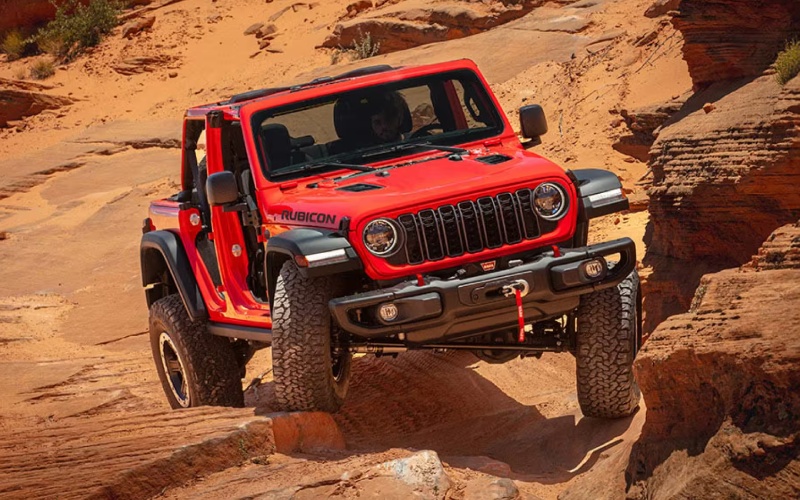
The 2026 Jeep® Wrangler is Trail Rated® and built to work — tow hooks, available steel bumpers, and the available factory-installed WARN® winch speak to its purpose. If you are in a 4-Door Wrangler that can tow up to a maximum of 5,000 pounds when properly equipped, premium fuel in the 2.0L Turbo makes particular sense on towing days. You will help the turbo maintain its strong torque with steadier response on I-94 and Highway 16, and you may notice smoother drivability when rolling from stoplight to stoplight in Oconomowoc with a trailer in tow.
Out on the trail, where low-speed, high-load crawling is part of the fun, your 4×4 system choice — Command-Trac®, Selec-Trac®, or Rock-Trac® — does the heavy lifting with gearing and traction. Fuel choice does not change the command of those systems, but with the 2.0L Turbo specifically, premium can help sustain crisp throttle response when you are repeatedly asking for torque on technical sections.
Prefer the 3.6L Pentastar® V6 for that classic Wrangler feel and sound? Keep using 87 octane, focus on steady throttle application, and let your chosen 4×4 system and tires do their jobs. Either way, the Wrangler is built to deliver the capability you expect.
Practical refueling tips from our Brookfield team
For day-to-day life around Waukesha, here is how our customers keep fuel simple and ownership enjoyable:
- Match fuel to plans: Driving to work and errands only — use 87. Big weekend with towing or lots of freeway merges in a 2.0L Turbo — use 91+.
- Fill before you venture out: Headed for Kettle Moraine? Top off near our dealership on W Capitol Dr so you are set for the day.
- Keep proof handy: If you switch between 87 and 91+ with a 2.0L Turbo, note it in your phone. It helps you correlate feel and performance with your plans.
Ultimately, Wrangler ownership is about confidence — whether that is daily driving around Frame Park or meeting friends at the trailhead. With the right fuel strategy, your 2026 Jeep® Wrangler will feel ready for it all.
Frequently Asked Questions:
Do I need premium gasoline all the time in a 2026 Jeep® Wrangler with the 2.0L Turbo?
No. The 2.0L Turbo is designed to run on high-quality 87 octane regular. Jeep notes that using 91 or higher-octane premium will allow this engine to achieve optimal performance — most noticeable under heavier loads, long highway merges, passing maneuvers, and towing.
Is it OK to use premium in the 3.6L Pentastar® V6?
Yes, it is safe — but generally unnecessary. The 3.6L Pentastar® V6 is engineered to deliver its intended performance on unleaded regular 87 octane. You should not expect a meaningful everyday benefit from premium in the V6.
Can I switch between 87 and 91+ in my 2.0L Turbo based on the day?
Yes. The Wrangler’s engine management can adapt when you move from 87 to 91+ and back again. Many of our owners use 87 during the week and choose premium for towing weekends or higher-demand trips.
What is the fuel tank capacity on the 2026 Jeep® Wrangler?
Wrangler 2-Door models hold 17.5 gallons of fuel. Wrangler 4-Door models hold 21.5 gallons of fuel — helpful for longer drives around Lake Country without frequent stops.
Does using premium improve towing capability on the 2.0L Turbo?
It does not change towing ratings, but it can improve drivability under load. If you are towing with a 4-Door Wrangler rated up to a maximum of 5,000 pounds when properly equipped, premium can help the turbo maintain its best response on grades and during sustained highway cruising.
Have a question we did not cover? Our team at City Chrysler Dodge Jeep Ram Fiat of Brookfield is happy to help you match a Wrangler setup — engine, 4×4 system, top and doors — and a fueling strategy to your life around Waukesha, WI.
Ready to feel the difference for yourself? Visit us at 19100 W Capitol Dr in Brookfield for a test drive, or contact our advisors to discuss how you drive, where you go, and which 2026 Jeep® Wrangler configuration — and fueling plan — fits best. We will walk you through the details and get you confidently on the road.
0 comment(s) so far on Which Fuel Should I Use in a 2026 Jeep® Wrangler near Waukesha, WI?